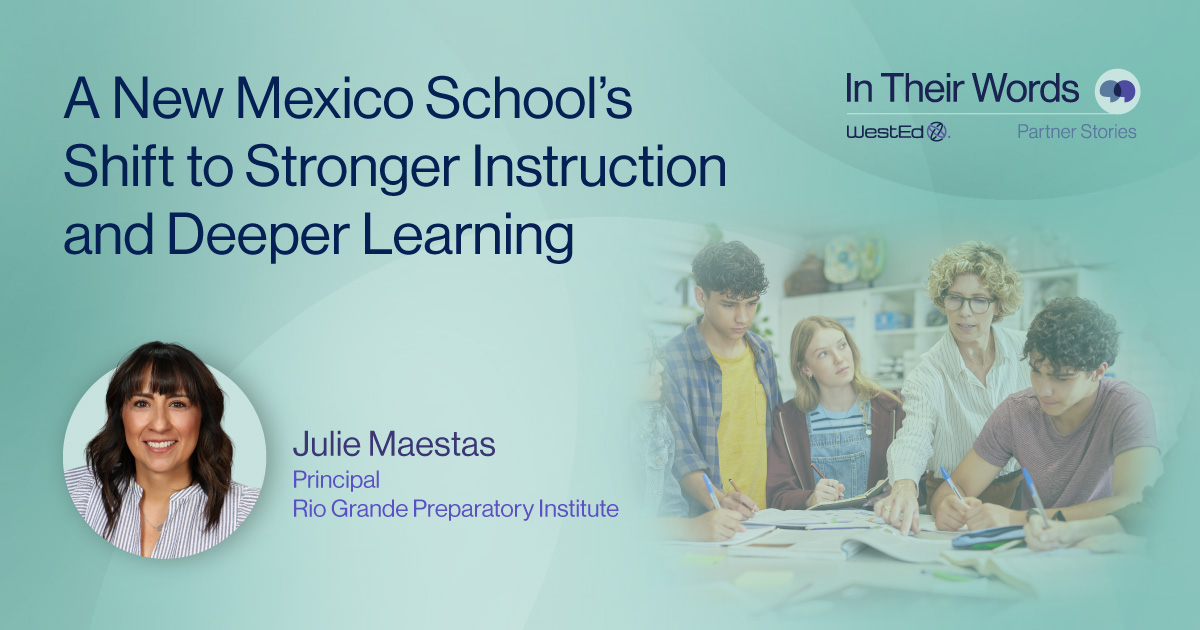
At Rio Grande Preparatory Institute in New Mexico, Principal Julie Maestas shares how the school is transforming instruction and making progress on chronic absenteeism, which fell from roughly 60 percent to 28 percent. She also discusses how WestEd’s Quality Teaching for English Learners professional learning is supporting deeper learning through discussion, collaboration, and promotion of student voice.
A new brief outlines human-centered practices that help leaders examine their own mindsets, work in partnership with others, and adapt systems to address the root causes of attendance challenges.
Cecelia Leong of Attendance Works and WestEd’s Rebeca Cerna discuss how early action; family trust; and coordinated support for health, safety, and connectedness can strengthen attendance.
Early findings from a WestEd evaluation show how one program is using relationship-centered circles to help schools strengthen relationships, increase student engagement, and make positive gains in student connectedness.
WestEd’s Lisa Eisenberg explains how education and healthcare systems can partner to sustain student health investments and support improved attendance and outcomes.
A Connecticut school recognized that its efforts to support students were taking place in silos. This story shows how professional learning and a shared framework helped the school align practices and increase collaboration.
As schools work to improve attendance and address behavioral challenges, multi-tiered systems of support (MTSS) offer a framework for coordinating student support. Early findings from a WestEd study show promising results, including fewer absences and behavior incidents.
Follow WestEd on Facebook, Bluesky, LinkedIn, and YouTube to stay updated on our latest research, resources, services, events, and career opportunities.